Home Big cats Lions

Lions

LionThe lion is can be found in parts of eastern and southern Africa, and is commonly protected in reserves. Since the early 1950's, the lion population in Africa has been reduced by half. Today, fewer than 21,000 lions remain in Africa. Because lions live on the plains and in large, open spaces, they are easy targets for sports an trophy hunters. Another danger for lions is a loss of habitat and agricultural expansion, as well as poisoning by livestock ranchers.


News about lions


Forest and donor countries stump up to reduce emissions - Paris, France: Forest and donor countries have kicked off an important joint process which could speed up action to reduce the 15 per cent of global carbon emissions linked to deforestation and forest degradation. Despite no formal agreement to achieve Reduced Emissions from forest Degradation and Deforestation (REDD) being reached at the United Nations conference on climate change last December, key nations met yesterday in Paris in a process being called the REDD+ Partnership Process. The initiative, which brings together major forest countries and donor nations, is hosted by Norway and France. Broad agreement has already been reached on principles and safeguards of REDD+ and according to WWF, the initiative represents a critical opportunity to mobilise early action and financing for national REDD+ programmes. “Slowing deforestation would help the world significantly cut global emissions,” said WWF Forest Carbon Initiative Leader Chris Elliott. “That’s an opportunity we simply cannot ignore as any delay in reducing emissions only makes it more difficult to limit global warming to well below 2 degrees C.” “The REDD+ Partnership process must build real momentum for countries to move ahead with REDD+,” said Elliott, “It is important this remains an open and inclusive process.” Countries have signalled their commitment to REDD+, with many developing countries, including Brazil and Indonesia, announcing targets for reducing emissions from deforestation and forest degradation. In Copenhagen, $3.5 billion was pledged for REDD+ by Australia, France, Japan, Norway, the UK and the US. “With funding already flowing for REDD+, it is vital that benefits for people and biodiversity are a fundamental part of this effort to integrate forests into the climate change solution,” said Elliott. “REDD+ is not only about the carbon stored in forests and so we must ensure there are positive social and environmental impacts as REDD+ becomes a reality.” For futher information: Melissa Tupper, WWF Forest Carbon Initiative Communications, Washington DC +1 202 495 4182, Melissa.Tupper@wwfus.org

More about:

Cheetahs are captured for the exotic 'pet' trade and shot for their fur. These are the biggest threats they have to deal with.
Nowadays people hunt at leopards cause leopards hunt at cattles and domestic livestock.
Tiger populations have fallen by 95% over the last century. Illegal hunting and trade in tiger parts, as well as habitat destruction ask for urgent measures to save this magnificent animal.

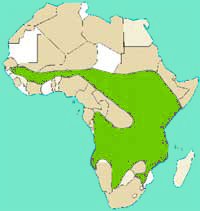
Living area lions

Living area lion in Africa

This is the area in Africa where Lions live.