
Water quality and hydrologyWetlands have important filtering capabilities. They intercept surface water runoff from higher dry land, before the runoff reaches open water. As the runoff water passes through, the wetlands retain the excess of nutrients and some pollutants. Next to his, they reduce the sediment that would clog waterways and affect fish and amphibian egg development. In performing this filtering function, wetlands save us a great deal of money. For example, a 1990 study showed that, without the Congaree Bottomland Hardwood Swamp in South Carolina, the area would need a $5 million waste water treatment plant. |
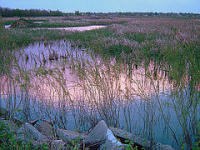 In addition to improving the water quality through filtering, some wetlands maintain a stream flow during dry periods, and many replenish groundwater. Many Americans depend on groundwater for drinking.
More about:
More than one third of the US threatened species live in wetlands.
Wetlands are some of the most biologically productive natural ecosystems in the world.
Water storage is one of the important abilities of wetlands.
Wetlands function as natural sponges that trap and slowly release water.
The ability of wetlands to control erosion is very valuable.
We use a wealth of natural products from wetlands and use them for recreation.
Global warming and lack of knowledge are reasons why wetlands are threatened ecosystems.
|