Home Marine Life Whales

Whales

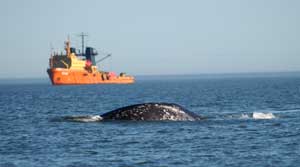
Whales face many threats to their welfare, health, and their existence. The main cause is commercial hunting and pollution. Chemicals and pesticides can poison their internal systems, while discarded rubbish like nets, plastics or fishing lines can strangle the animals to death. Whales are, just like dolphins, highly acoustic mammals. Noise caused by coastal developments and industrial activities can disrupt whales. Tourism also effects whales. They can feel very harassed, especially when they are breeding and calving.

When chemicals pollute the oceans, the food of whales also gets polluted. Female whales then pass these pollutants directly on to their young through their milk, which can result in death or disability. These pollutants also cause the lowering of the whale's resistance to disease. This means they are more likely to die from diseases.

Commercial as well as scientific whaling by countries as Japan and others remains a huge threat to the survival of certain whale species.

whales

More about:

Entrapment in fishing nets and marine pollution are threats various dolphins have to deal with.
Turtles are one of the world's oldest animals. Now they are driven into extinction by pollution and hunting.

Whales in the News

ScienceDaily: Latest Science News


Brainstem, spinal cord images hidden in Michelangelo’s Sistine Chapel fresco - Michelangelo, the 16th century master painter and accomplished anatomist, appears to have hidden an image of the brainstem and spinal cord in a depiction of God in the Sistine Chapel's ceiling, a new study reports. These findings by a neurosurgeon and a medical illustrator may explain long controversial and unusual features of one of the frescoes' figures.

Sleep disorder may signal dementia, Parkinson's disease up to 50 years early - A new study shows that a sleep disorder may be a sign of dementia or Parkinson's disease up to 50 years before the disorders are diagnosed.

Planets found in unusually intimate dance around dying star - Astronomers have found two extrasolar planetary systems with gas giant planets locked in an orbital embrace. In one system -- a planetary pair orbiting the massive, dying star HD 200964, located roughly 223 light-years from Earth -- the intimate dance is closer and tighter than any previously seen.